Article: Pajamas – the story of the Indian word that conquered the world
Pajamas – the story of the Indian word that conquered the world
Pyjamas – an Indian word that traveled the world
The word pyjamas comes from the Hindi/Urdu-Persian pāy-jāma / pā-jāma (पायजामा / پاجامہ).
It originally consists of two Persian words:
pāy = leg or foot
jāma = clothing / garment
The meaning is therefore quite simply “leg garment”.
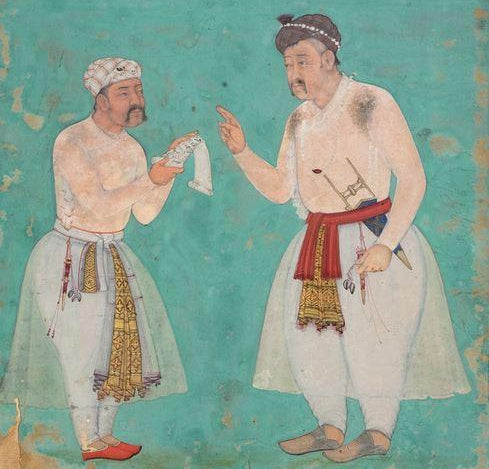
Originally, the word had nothing to do with sleepwear. Pajama referred to a pair of loose, lightweight trousers, which were worn in India and other parts of South Asia. They were often made of cotton and combined with a kurta, the traditional long shirt.
From India to Great Britain
The story becomes particularly interesting during British colonial rule in India.
British men who stayed in India during the 18th and 19th centuries began to adopt the local attire. In the hot climate, the loose Indian cotton trousers were far more comfortable than the heavy European clothing of the time.
The British brought both the clothing and the word home with them.
In English, pāy-jāma became pyjamas — and in Great Britain during the 19th century, people began using pyjamas as comfortable loungewear and eventually, in particular, as sleepwear.
It is therefore in Europe that the meaning gradually changes from:
Indian loose trousers → casual loungewear → sleepwear.
A small textile-historical detail
It is also a fine example of how much influence India has had on European clothing and textile culture. Several common English words have connections to India and the international textile trade.
For example calico from Calicut (Kozhikode), chintz from the Hindi chīnt, khaki from Urdu/Hindi khākī and dungaree from the Dongri area near Mumbai.
So when we in Denmark say:
“I am putting on my pyjamas”
we are actually using a word with a hundreds-of-years-old journey from Persia and India to Europe.
.%0AIt%20originally%20consists%20of%20two%20Persian%20words:%0Ap%C4%81y%20=%20leg%20o...)