Dabu Print – The Traditional Mud Resist Hand Block Printing of Rajasthan
Dabu Print – The Traditional Mud Resist Technique from Rajasthan
Dabu print is one of India's oldest and most fascinating textile techniques. Originating from Rajasthan, this method has been used for hundreds of years by skilled artisans who have developed a unique way of creating beautiful patterns on cotton fabrics.
Unlike ordinary block printing, where the dye is applied directly to the fabric, Dabu printing uses a special mud paste to protect parts of the fabric during dyeing. This technique is called a resist technique and gives textiles their characteristic, soft, and vibrant look.
What does Dabu mean?
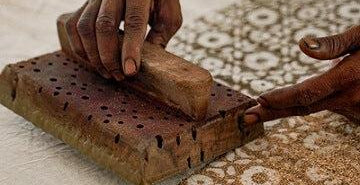
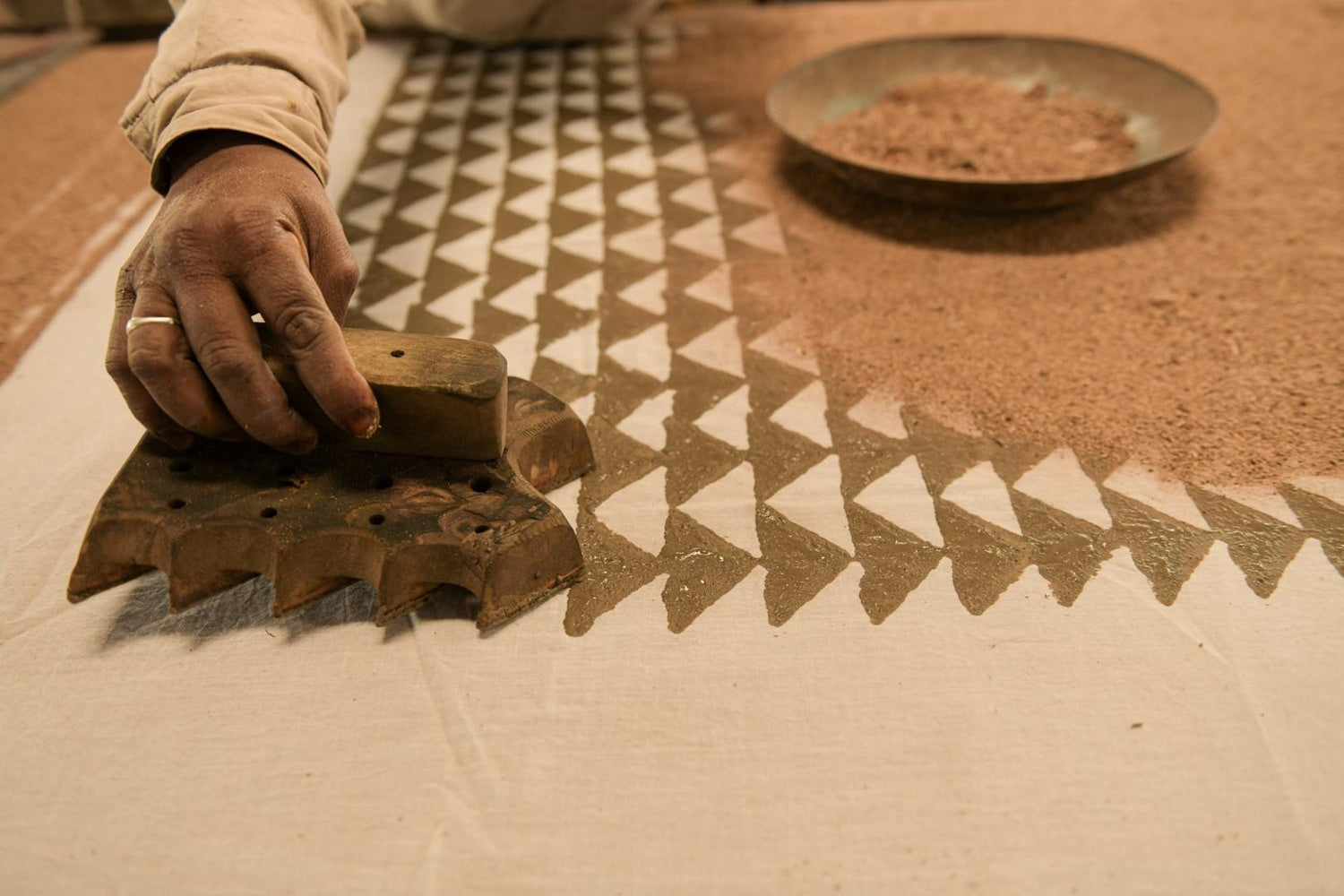
The word Dabu roughly means "to press" or "to cover" and refers to the traditional process where the artisan applies a mud mixture to the fabric with a carved wooden block.
The mud mixture acts as a resist against the dye. When the fabric is later dyed, the color only penetrates where the mud does not cover. After washing, the light patterns that were protected throughout the process are revealed.
A technique created from nature's materials
The traditional Dabu paste is made from natural ingredients, including:
-
Clay
-
Lime
-
Natural plant gums
-
Wheat bran
Once the paste is printed on the fabric, fine sawdust is often sprinkled over the pattern. The sawdust helps protect the mud layer during drying and subsequent dye baths.
This is a method that requires great experience and precision, as temperature, humidity, and drying time all affect the result.
Dyeing with indigo and natural dyes
Once the mud is dry, the fabric is dyed – traditionally with natural indigo or other plant-based dyes.
After dyeing, the mud layer is washed off, and the protected areas remain as light patterns against the dyed background.
If more colors are desired, the process is repeated several times with new prints and dye baths. Therefore, a single piece of fabric can go through many stages of work before it is finished.
Craftsmanship with character
No two Dabu prints are exactly alike. Small variations in print, colors, and patterns are a natural part of the handmade process and give each textile its own unique expression.
Precisely these variations emphasize that the fabric is created by hand – not produced on an industrial printing machine.
Dabu print today
Although modern textile production has taken over much of the market, the Dabu tradition lives on in several villages around Jaipur, Pipar, and Bagru. Here, artisans still work with the old techniques and combine them with contemporary designs, so the tradition continues to evolve.
At MASALA, we value the craftsmanship behind Dabu print. Each textile is the result of time, experience, and great respect for the ancient craft traditions that for generations have made Rajasthan one of the world's most recognized areas for hand-printed textiles.
Why Dabu print is special
Dabu print is not just about beautiful patterns – it is about patience, precision, and respect for old craft traditions.
When you choose a Dabu-printed textile, you choose a product where every single detail is created through a slow, meticulous process. The result is vibrant textiles with depth, character, and a history that goes back several hundred years.