Ajrakh Print – a masterpiece of hand block printing and natural dyes
Ajrakh Print – A Masterpiece in Hand-Block Printing and Natural Dyes
Ajrakh printing is one of the most advanced and traditional forms of hand-block printing in India. The technique has been used for centuries and is known for its beautiful geometric patterns, deep natural colors, and an impressive production process that can take several weeks.
Ajrakh is particularly associated with the Kutch region in Gujarat and the historical traditions of Sindh. Here, artisan families have, for generations, preserved a technique where precision, patience, and respect for nature's materials are crucial.
A Tradition Rooted Hundreds of Years Ago
Ajrakh printing has a long history, dating back many centuries. The craft has been passed down from generation to generation, with families preserving the ancient techniques and patterns.
The word Ajrakh is believed by many to have originated from the Arabic word azrak, meaning "blue." This fits well with the tradition, as indigo remains one of the most important colors in classic Ajrakh printing. However, there are various explanations for the name's origin, and its precise meaning has not been definitively established.
Geometric Patterns with Great Precision
While Bagru and Sanganer are often known for flowers, leaves, and organic shapes, Ajrakh is famous for its symmetrical geometric patterns.
Typical elements include:
-
Stars
-
Rhombuses
-
Circles
-
Hexagonal patterns
-
Repeated geometric ornaments
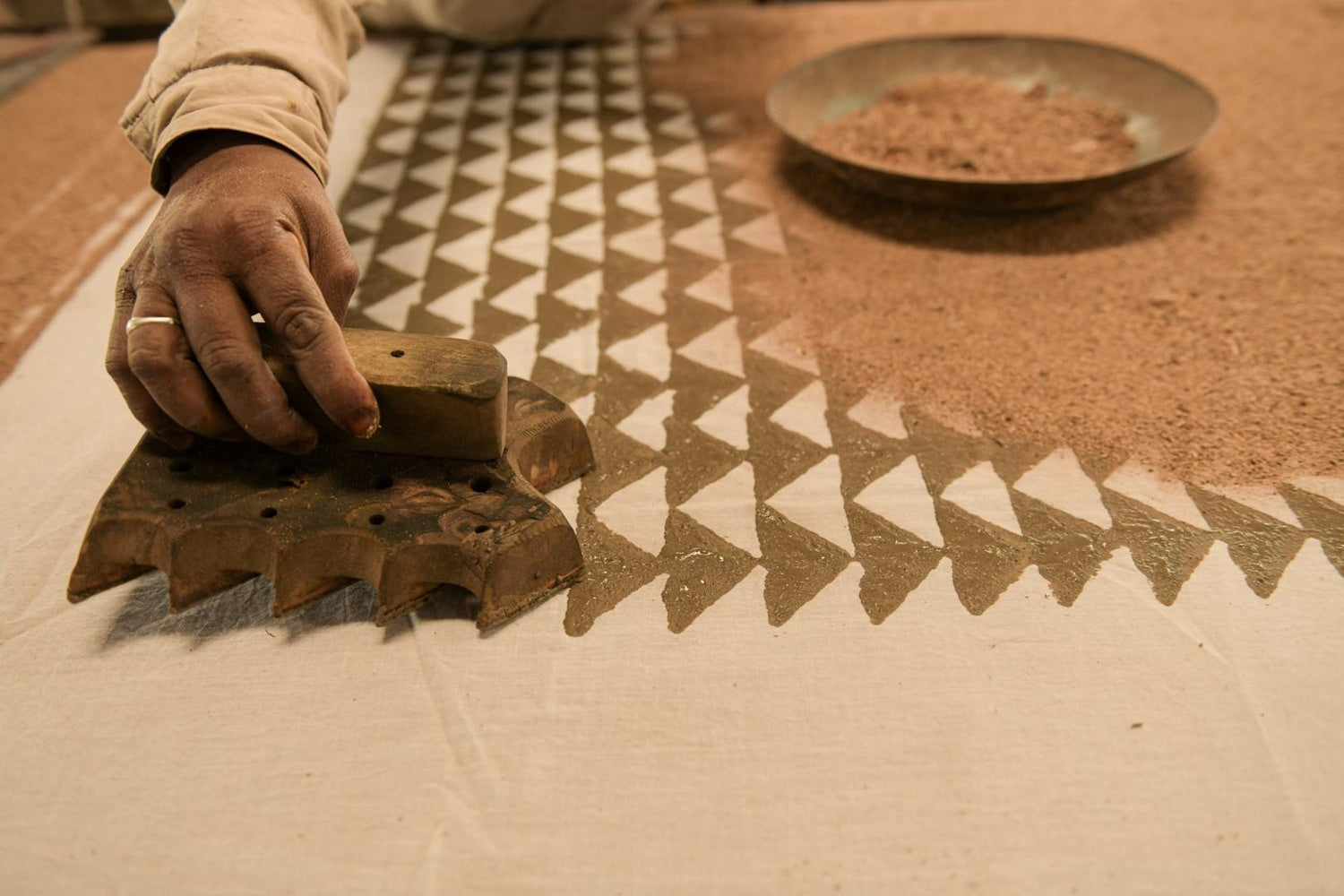
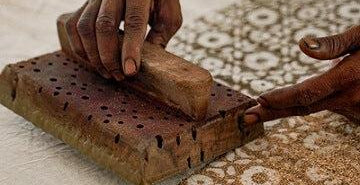
The patterns are printed with hand-carved wooden blocks, with each block carved with great precision. Each color requires its own block, and even a small displacement can alter the final result.
Natural Dyes Play the Main Role
Traditionally, Ajrakh is made with natural dyes, including:
-
Indigo, which gives the characteristic blue shades
-
Madder root, which creates red tones
-
Iron-based mixtures for black shades
-
Pomegranate rind and other plant-based ingredients for yellow and brown tones
The colors are built up through several dye baths, and the process can involve both resist techniques and repeated block printing.
One of the World's Most Demanding Textile Techniques
Ajrakh printing is known for its extensive production process.
The fabric is washed, pre-treated, printed, dried, and dyed multiple times. Each step is done by hand, and numerous block prints and dye baths can be involved before the pattern is complete.
This slow process requires extensive experience and gives the textiles their unique depth and character.
Each Textile Tells Its Own Story
Because the entire process is carried out manually, each piece of fabric will have slight variations in color and pattern. These differences are a natural part of the craft and bear witness to the fact that the textile is handmade.
It is precisely these details that make Ajrakh printing something special and give each product its own unique expression.
Ajrakh Today
Today, many workshops in Kutch continue to work with traditional techniques while also developing new designs for modern clothing and home textiles.
At MASALA, we appreciate craftsmanship where tradition and quality go hand in hand. Ajrakh print is a beautiful example of how ancient techniques can continue to create timeless textiles with character and history.
When you choose a textile inspired by the Ajrakh tradition, you are choosing a product where craftsmanship, natural dyes, and cultural heritage meet in a unique design.
See our Ajrakh bedspreads and pillows here