Pipar – a Hidden Gem in Rajasthan's Textile Traditions
Pipar – a hidden gem in Rajasthan's textile traditions
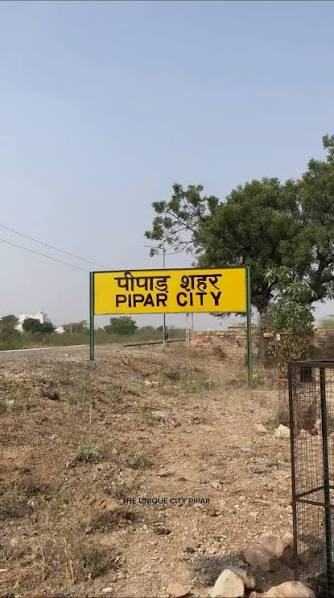
When talking about Indian hand block printing, Jaipur, Bagru, and Sanganer are often mentioned first. But further west, in the Jodhpur district, lies the small town of Pipar – also known as Pipar City – where ancient textile traditions still thrive.
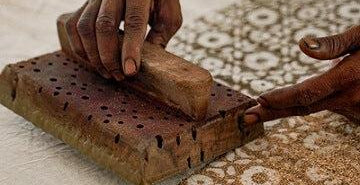
Pipar is especially renowned for its work with Dabu printing and indigo dyeing. Here, local artisans have, through generations, developed techniques where natural materials, hand-carved wooden blocks, and great precision come together in beautiful hand-printed textiles.
A long tradition of craftsmanship
For centuries, Pipar has been home to families working with block printing and natural dyes. Many of the workshops are small family businesses where knowledge and techniques are passed down from one generation to the next.
Although the town is less known than Jaipur, it plays an important role in preserving Rajasthan's traditional textile craftsmanship.
Dabu printing and indigo dyeing
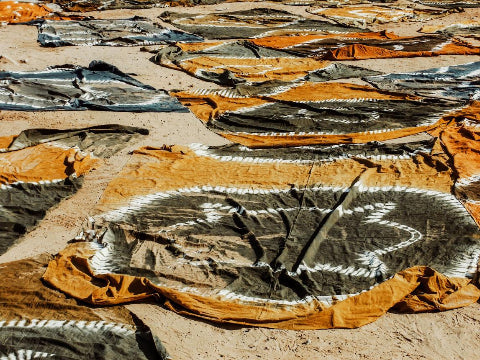
Pipar is particularly associated with Dabu printing – a special resist technique where a paste of clay, lime, plant gum, and wheat bran is printed onto the fabric with hand-carved wooden blocks.
Once the paste has dried, the fabric is dyed – often in natural indigo. The areas covered by the mud paste do not absorb the dye. After washing, the light patterns stand out clearly against the deep blue background.
This process can be repeated several times to create textiles with great depth and richness of detail.
Nature's colors
In Pipar, natural dyes are traditionally used, which have been an important part of the craft for centuries.
Among the most commonly used are:
-
Indigo for deep blue hues
-
Madder root for warm red tones
-
Iron-based mixtures for black details
-
Plant-based dyes for yellow and brown shades
These colors give the textiles a vibrant and harmonious expression that develops character over time.
Craftsmanship with respect for tradition
Production in Pipar still takes place at a calm pace. The fabric is washed, pre-treated, printed, dried, and dyed over several days. Each phase is carried out with great care, and the finished result is a textile with small natural variations that attest to genuine craftsmanship.
It is precisely these variations that make each product unique and give the textiles a character that cannot be achieved through industrial production.
Pipar today
Although modern textile production is becoming more prevalent, many workshops in Pipar adhere to traditional techniques. At the same time, they develop new patterns and designs that make the classic craft relevant for today's fashion and home decor.
The town is therefore a fine example of how ancient craft traditions can continue to exist and adapt to a modern world without losing their authenticity.
MASALA and Indian textile traditions
At MASALA, we have great respect for the craft traditions found in Rajasthan. The stories from places like Jaipur, Bagru, Sanganer, and Pipar show the vast knowledge, experience, and passion behind hand-printed textiles.
When you choose a handmade textile, you are not just choosing a beautiful design – you are choosing a product created through generations of experience and a deep respect for the craft.